
Concrete Repair & Replacement in the Twin Cities
Cracked driveways, settled sidewalks, scaling patios, faulted garage floors, broken parking lot panels, and worn warehouse slabs. We look at the base and the drainage before we quote, then tell you straight whether the concrete should be repaired or replaced.
Most failing concrete is a base problem wearing a surface disguise.
A slab does not settle, fault, or crack in a grid pattern because the concrete was weak. It happens because water moved soil under it, the granular base was thin or never compacted, the grade sent runoff toward the slab instead of away from it, or the joints were never cut where the concrete wanted to crack. Minnesota freeze-thaw cycling and de-icing salt then take whatever opening they are given.
That is why our repair work starts underneath. We check slab support, joint behavior, drainage, and how far surface damage has actually gone before recommending anything. Sometimes the fix is lifting a settled panel back to grade for a fraction of replacement. Sometimes the honest call is tear-out — and we will say so rather than sell you a patch that fails next spring.
We handle residential, commercial, and industrial concrete repair and replacement across Hugo, White Bear Lake, Forest Lake, Lino Lakes, Blaine, Stillwater, Woodbury, Maplewood, Roseville, Minneapolis, St. Paul, and the surrounding metro.
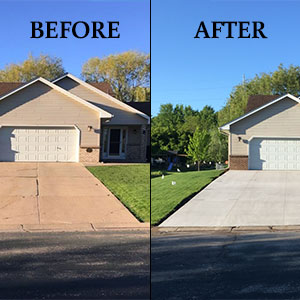
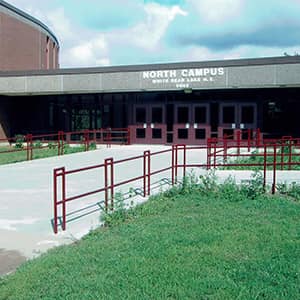
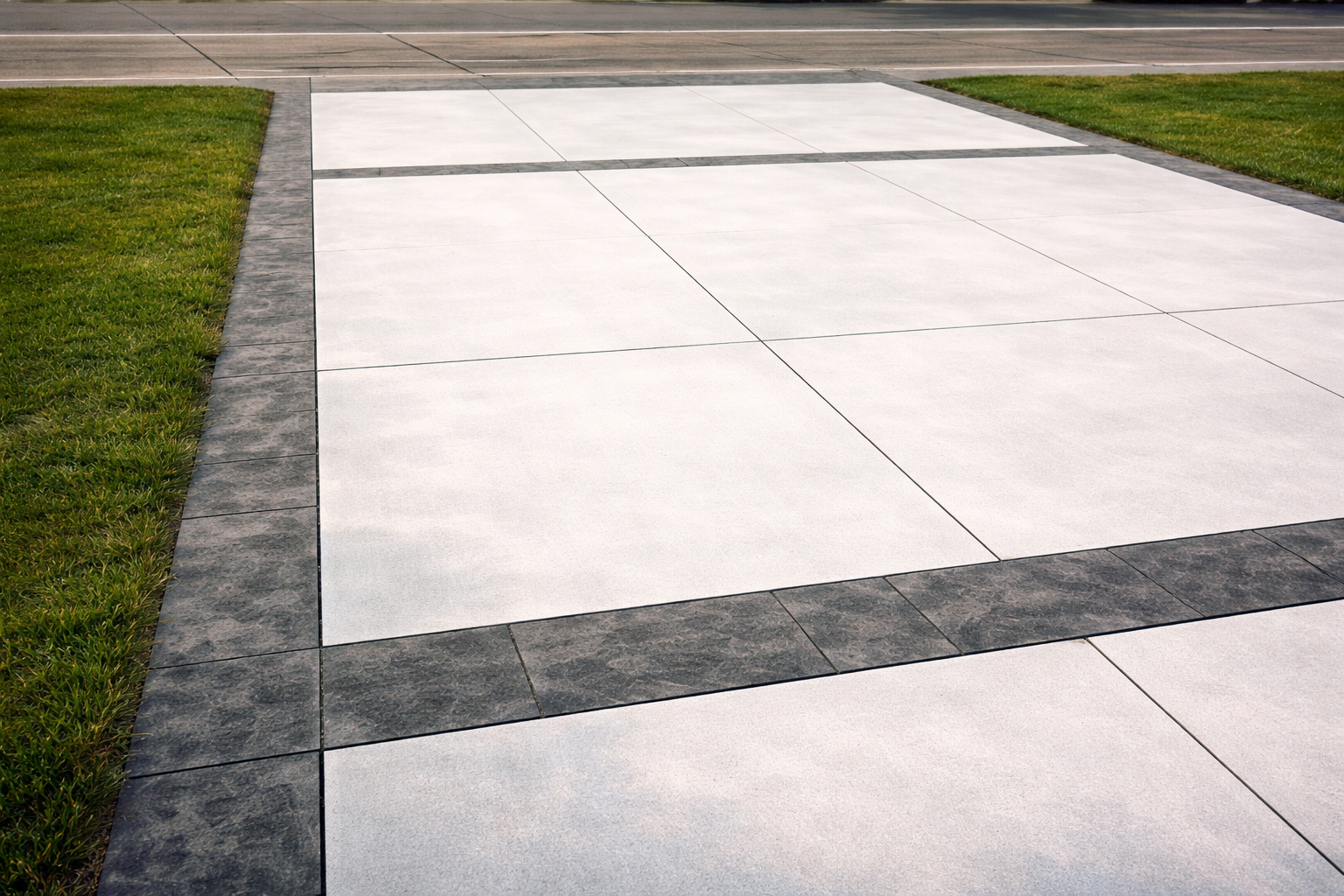
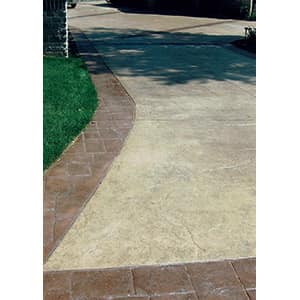
What we repair, and what is better off replaced.
Concrete Repair
Right when the slab is still structurally sound and the damage is localized.
- Concrete lifting and mudjacking for settled slabs
- Crack routing, cleaning, and sealing
- Spall and scaling repair at edges, joints, and dock doors
- Grinding and saw-cutting trip hazards at faulted joints
- Joint filling and re-sealing on interior slabs
- Step and stoop repair, resurfacing, and re-tread work
Concrete Replacement
Right when the base has failed, the slab is broken through, or the grade has to change.
- Driveway, apron, and curb-cut replacement
- Sidewalk and walkway panel replacement
- Patio, pool deck, and entry slab replacement
- Garage floor and shed slab replacement
- Parking lot panel and curb-and-gutter replacement
- Warehouse floor sections, dock aprons, and pits
Six failures we get called about most, and what each one means.
Settled or sunken slab
One panel sits low, water pools against the house, or the sidewalk steps down at a joint. If the slab is intact, lifting it back to grade is usually the efficient fix.
Faulted joints and trip hazards
Adjacent panels no longer meet. Grinding or saw-cutting handles small offsets; a large fault means one side lost support and needs to be raised or replaced.
Flaking, peeling, scaling surface
The top layer is coming off in sheets or chips — a freeze-thaw and salt problem. Shallow scaling can be resurfaced and sealed; deep loss exposes aggregate and means replacement.
Cracks running the full slab
A tight isolated crack can be sealed. Multiple cracks, wide cracks, or cracks with vertical movement mean the slab is no longer working as one piece.
Crumbling edges and aprons
Garage and street aprons take the worst of the plow, salt, and wheel loads. Edge deterioration is common and usually handled as a defined replacement section.
Spalling at joints and dock doors
On commercial and industrial slabs, joint edges break down under hard-wheeled traffic. Armored joint repairs and spall patching restore the edge without replacing the floor.
Same standards, different design problems.
Residential
Driveway replacement, apron repair, sidewalk and walkway panels, patios and pool decks, garage floors, steps and stoops. Related reading: apron repair and replacement, steps and stoops, and garage floor replacement. Full scope on our residential concrete page.
Commercial
Sidewalk panel replacement, ADA ramp and landing corrections, curb and gutter, dumpster pads, entry slabs, and parking lot sections. See sidewalk repair vs replacement and our commercial concrete services.
Industrial
Warehouse floor sections, joint and spall repair, dock approaches, equipment pads, and trench drain tie-ins, staged around production. More on warehouse floors and industrial concrete.
Removal, base, reinforcement, jointing, cure.
- Site walk with you — how the space is used, where water goes, what failed and why
- Clean saw-cut lines so new work meets existing concrete at a defined joint
- Breakout, removal, and haul-away of the old slab
- Subgrade check, removal of unsuitable soils, compacted granular base in lifts
- Grade set for positive drainage away from buildings and toward daylight
- Reinforcement sized to the loads, with isolation joints at fixed structures
- Air-entrained mix for freeze-thaw exposure, placed and finished by our own crew
- Control joints cut on time, curing protected, site left clean
Freeze-thaw and salt only finish what bad prep starts.
Minnesota slabs cycle through freezing and thawing dozens of times a season. Water gets in through an unsealed crack or a scaled surface, freezes, expands, and widens the path it came in through. De-icing chloride accelerates it. Cold-climate practice from the American Concrete Institute and repair guidance from the International Concrete Repair Institute both come back to the same things: air entrainment, drainage, jointing, and curing.
Background reading on the failure modes: scaling and spalling repair and why concrete cracks in Minnesota.
Honest evaluations before honest quotes.
Second-generation concrete contractor based in Hugo, MN, working across the Twin Cities metro.
We evaluate slab support and drainage, so the repair addresses the cause and not just the symptom.
Free estimates, our own crews on site, clean job sites, and clear communication start to finish.
Concrete Repair & Replacement FAQs
- Should concrete be repaired or replaced?
- It depends on what failed. If the slab itself is sound and the problem is settlement, a raised joint, or shallow surface wear, repair usually makes sense. If the base has washed out, the slab is cracked through in multiple places, the slope drains toward the house, or scaling has gone deeper than about a half inch, replacement is the honest answer.
- What is concrete lifting or mudjacking?
- Both terms describe raising a settled but intact slab back to grade by injecting material through small drilled ports — a cement-based slurry with mudjacking, or expanding polyurethane foam. It corrects trip hazards and negative slope on sidewalks, garage floors, aprons, steps, and stoops without tearing the concrete out.
- Can a cracked concrete driveway be repaired?
- A single tight crack in an otherwise sound driveway can be routed, cleaned, and sealed to keep water and salt out. A driveway with a network of cracks, faulted panels, or crumbling edges has usually lost its base support, and patching it just buys a season or two.
- What causes concrete to flake, peel, and scale in Minnesota?
- Surface scaling comes from water inside the top layer freezing and expanding — usually made worse by de-icing salt, a finish that was overworked or sealed too early, insufficient air entrainment, or a pour that was troweled while bleed water was still on the surface.
- Do you repair commercial sidewalks and parking lots?
- Yes. We replace failing sidewalk panels, saw-cut and remove damaged parking lot sections, rebuild curb and gutter, correct ADA slope and cross-slope issues at ramps and landings, and patch or replace dumpster pads and loading aprons.
- Can you repair a warehouse floor without shutting down the building?
- Usually. Industrial slab work is often staged section by section, over nights and weekends, with joint repairs, spall repairs at dock doors, and full panel replacements sequenced so the facility keeps operating around the work.
- How long does a concrete repair or replacement take?
- Most residential replacements — a driveway, patio, sidewalk run, or garage floor — are removal and pour within a few working days, followed by a cure period before traffic. Slab lifting is often a single-day job. Commercial and industrial scopes depend on staging and access.
- How soon can concrete be driven on after replacement?
- Foot traffic generally comes first, then vehicle traffic once the slab has gained enough strength — timelines shift with weather, mix design, and slab thickness. We give you a specific hold time for your pour rather than a generic number.
- Do you remove and haul away the old concrete?
- Yes. Saw-cutting, breakout, removal, and haul-away are part of a replacement scope, along with re-establishing the base, grade, and drainage before the new concrete goes down.
- Do you offer free estimates on concrete repair work?
- Yes. We walk the site, look at the base and drainage instead of only the surface, and tell you honestly whether repair or replacement is the better long-term value. Call 651-353-7858 or use the contact form.
Start Your Concrete Project the Right Way
Twin Cities concrete specialists. Free estimates. Built to last.